Sourdough Stories - Hannah Bironzo - Middling Along
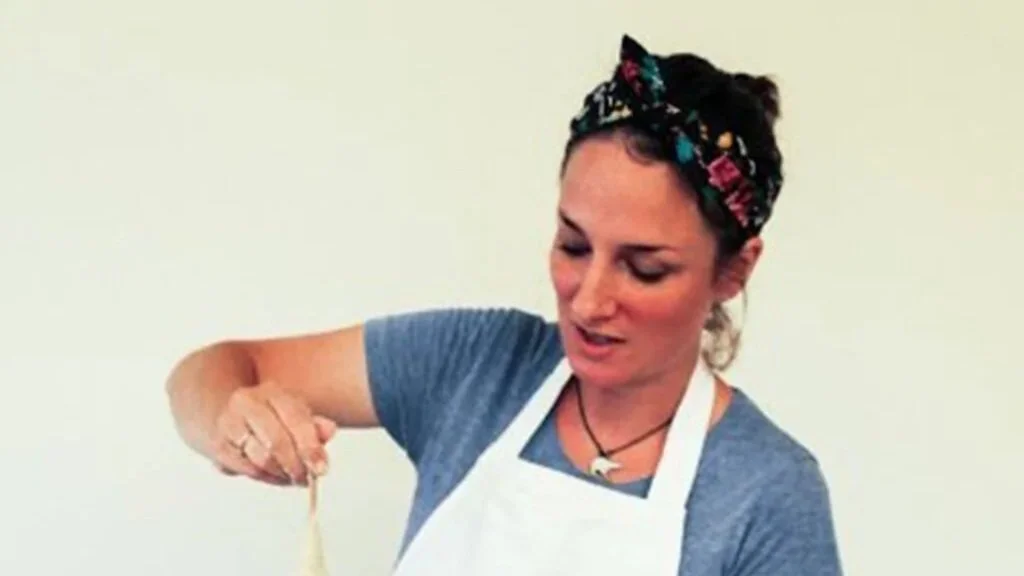
Hannah Bironzo aka The Gypsy Baker
The Gypsy Baker’s Hannah Bironzo on launching online sourdough workshops during lockdown, building a supportive baking community, and why bread-making is therapeutic. Learn about starter care, Kitchen Stories masterclasses, and tips for turning a passion into a small business.
We’ve come a long way baby…
In this - the very first episode of the Middling Along podcast, I talk to Hannah about launching her business The Gypsy Baker (teaching online sourdough bread-making classes) during the UK’s first lockdown. We talk about why baking struck such a chord with so many of us in turbulent times, the poignant story behind her well-travelled sourdough starter, and why ‘food love stories’ resonate with us so strongly.
I’m sad to say I didn’t maintain my sourdough enthusiasm (I struggled to keep my starter alive, I hope Hannah has forgiven me…) - but I do have a brilliant No Knead Bread recipe I’m happy to share!
-
Emma Thomas: Hi and welcome to series one, episode one of the Middling Along podcast. I couldn’t be more delighted that my first guest is Hannah Bironzo. She’s going to be talking to us about her business, The Gypsy Baker. Hi, Hannah.
Hannah Bironzo: Hi Emma — thanks so much for inviting me on. I’m totally honoured to be your very first guest.
Emma: Let’s dive in. Where did the name The Gypsy Baker come from?
Hannah: It’s a nod to my family. My paternal great-grandfather, Sydney Gregory, was born a Gypsy and led a very adventurous life. My maternal grandfather was a baker who worked for a large family bakery. I married those two parts of my ancestry to create the name.
Emma: You launched during the first UK lockdown earlier this year. Had you been thinking about this for a while?
Hannah: Yes — at least three or four years. I’ve always loved bread and have been making my own for many years. Living in France and Italy inspired me; when I moved back to Oxford I was disappointed with available bread, which prompted me to learn. About five or six years ago I learned sourdough and got hooked. I’m a teacher by profession and designing a sourdough workshop felt natural — combining teaching with baking.
Emma: How did lockdown affect your plans?
Hannah: I had a two-hour face-to-face workshop trialled and ready, but lockdown hit and my first customer — Emma — became the reason to move online. You suggested doing it over Zoom and I redesigned the timings and format. I trialled it with a group, started a private Facebook community, and it took off — I was booked every week for months and I’m still running workshops now. For me it was a silver lining of lockdown.
Emma: Looking back, any advice you’d give your past self?
Hannah: Value your time. When something is a passion project it’s easy to go full pelt, but you must pace yourself and set boundaries. I had two small children, a job, and I was homeschooling during lockdown, so it got busy. I probably should have scheduled time off rather than running a workshop every week for the first months.
Emma: What’s been the high point so far?
Hannah: The community. I started by posting on my personal Facebook and invited people who were interested into a group. Word of mouth spread and once people did the workshop they got hooked — keeping a starter alive leads to more baking and exploring different flours, hydration levels and techniques. People post photos in the Facebook group and offer peer support; it’s become my favourite space online. Someone even said, “You’ve created a group where people actually talk to each other and are nice to each other” — that meant a lot.
Emma: What’s been the most challenging?
Hannah: Boundaries. I find it hard not to respond instantly when my phone lights up; I care about my customers and want to help, but it can take over life if you don’t set limits.
Emma: Ambitions for the next 12 months? What does success look like?
Hannah: First, I want to keep teaching the sourdough workshop — I’ve taught over 90 people and the feedback’s been great. I’d like to broaden the audience: run workshops for corporate groups as team building, which could generate income to offer scholarships or bursaries. I’m also launching a new series called Kitchen Stories, collaborating with three chefs to host masterclasses from people’s own kitchens. If the trial goes well there may be a second series — learning in your own kitchen helps people recreate what they learn.
Emma: For listeners daunted by keeping a sourdough starter alive, what would you say?
Hannah: I demystify it. I give a simple checklist: if you see bubbles it’s active; if it smells yeasty and nice it’s doing well; if it looks like thick porridge it’s the right consistency. If it’s not thriving, it needs more food (flour and water), or a spell in the fridge to slow it down, or room temperature to activate it. I post the starter in the post to workshop participants — I had someone learn from France and the starter survived the journey. Sourdough is resilient.
Emma: Your starter sounds well travelled. Tell us the story.
Hannah: The starter I use now was given to me by a dear friend, Alessandra, who was a humanitarian psychologist and loved bread. When she went to California she hunted down a favourite bakery in San Francisco and asked the baker for a teaspoon of starter, which she brought back in a jam jar. She gave it to me when she returned and it was lively and smelled beautiful. Alessandra later died of breast cancer; naming the starter “Alessandra” felt right — it’s a lovely living legacy.
Emma: Do you think the physical process of baking is therapeutic?
Hannah: Absolutely. Mixing flour, water and starter is mindfulness: you notice behaviour, texture and smell. Kneading, stretching and folding can be stress-relieving. Working with fermentation teaches patience — you can’t speed it up — and that’s a good lesson. Each loaf is unique and there’s joy in making something with your hands. I was contacted by Oxfordshire Mind to run a workshop for staff as a team builder, which felt like recognition of the activity’s value for wellbeing. There’s also research and books (e.g., Bread Therapy by Pauline Beaumont) exploring baking’s mental health benefits.
Emma: Have you noticed any physical benefits from sourdough?
Hannah: There’s growing research on digestibility. Some people with non-coeliac gluten sensitivity find sourdough easier to digest because of fermentation. Vanessa Kimbell, for example, is researching bread digestibility and gut health. I’m not an expert, but it’s interesting.
Emma: When you’re not baking, how do you switch off?
Hannah: I like running along the Thames and being outdoors. I also love singing — I’m in a band and a choir — and that’s been hard in lockdown. Nothing beats singing with people in harmony. I also do yoga and meditation when I can.
Emma: Advice for listeners wanting to move an idea to launch?
Hannah: Trust your instincts and go for it, but also study your audience and market, even informally. Know your subject inside out and know your target audience. It’s a low-risk, low-barrier moment to try things online — Etsy, Facebook and other platforms make it easy to launch.
Emma: Best piece of business advice you’ve received?
Hannah: A friend and bandmate, Steph Pirie, said to me: “Hannah, you are your business — so just be you.” That stuck. When you run a business online, it’s easy to compare yourself to others; staying authentic matters.
Emma: If I gave you £1,000 to invest in your business, what would you spend it on?
Hannah: A KitchenAid would be lovely, but more realistically I’d spend it on advertising. I’ve reached most of the people who already know me, but I need to present myself to people who don’t — to get more sign-ups and grow the audience.
Emma: Can you recommend someone for future episodes?
Hannah: Sandra, who runs Waste to Taste in Oxford, a social enterprise changing lives — she’s authentic and passionate. Also Lorna, who writes bespoke audio stories for children with illustrations by her sister — a beautiful, thoughtful gift.
Emma: Thank you so much for being my very first interviewee.
Hannah: Thank you for having me. Take care.
Emma (closing): You’ve been listening to the Middling Along podcast. Subscribe to be notified when the next episode is live and visit the blog at www.middlingalong.com to sign up for the newsletter. If you enjoyed this episode, please leave a short review to help others find the podcast. Hope you can join us next time — goodbye for now.
Ready to rethink midlife work? Explore coaching with The Triple Shift.
Check out these other great episodes and remember to subscribe