
Capturing Menopause Through the Camera Lens - Elizabeth Dalziel - Middling Along
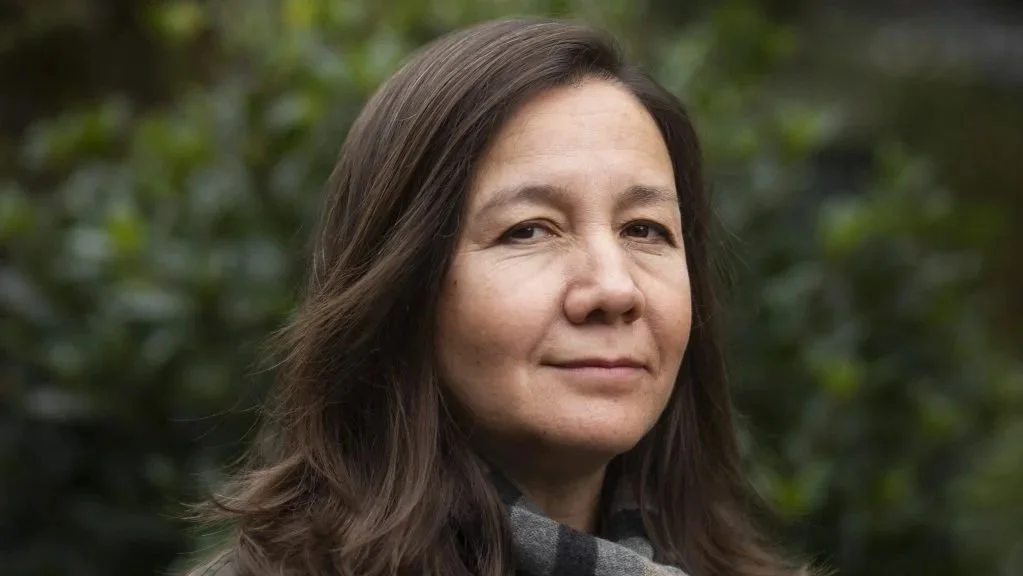
Elizabeth Daziel
In this episode, Elizabeth Dalziel discusses how she translated her menopause experience into powerful photography and visual storytelling. From hormonal upheaval to creative clarity, this conversation reframes what menopause looks like.
About this Episode
My guest this time is Elizabeth Dalziel - a photographer with an illustrious string of assignments under her belt.
She’s lived and worked in more countries than most of us will visit in our lifetimes! She has won awards for her work covering the Iraq war, the 2004 Tsunami in Asia, and - closer to home - documenting the homeschooling of her children during the pandemic.
After being diagnosed with breast cancer aged 48, she was put into a chemically-induced menopause and plunged immediately into a maelstrom of hot flashes, mood swings, brain fog, depression and more.
She felt like she was falling apart….but Elizabeth has used her experience to fuel her creativity and created a brilliant photojournalism project that includes self-portraits, images of friends (depicting their own symptoms and struggles), images from different cultures around the world, and images of prominent activists and medics working in the menopause space.
Tune in to find out more about Elizabeth’s personal experience of menopause, her creative processes, and the insights she has gained from her work with women in other cultures and countries.
You can find the series at https://www.elizabethdalziel.com/index
-
Emma Thomas:
Hello and welcome back to the Middling Along podcast. I’m your host, Emma Thomas, founder of Managing the Menopause and executive coach at The Triple Shift.My guest today is Elizabeth Dalziel. She’s a photographer with an illustrious string of assignments under her belt and has lived and worked in more countries than most of us will visit in our lifetimes. She’s won awards for her work covering the Iraq War, the 2004 tsunami in Asia, and closer to home documenting the homeschooling of her children during the pandemic.
But the reason she’s here today is that after being diagnosed with breast cancer at age 48, she went into a chemically induced menopause that plunged her immediately into a world of hot flushes, mood swings, brain fog, depression and more. She felt like she was falling apart.
If you listened to my interview with painter Sarah Gregory, in a similar vein Elizabeth has used her experiences to fuel her creativity and created a brilliant photojournalism project that includes self-portraits and portraits of others going through menopause and their symptoms, as well as individuals who work in the menopause field.
So welcome along to the podcast, Elizabeth.
Elizabeth Dalziel:
Thank you so much, Emma. It’s a pleasure being invited to such an important podcast — one dealing with middle age and women who are often overlooked as they’re sandwiched between responsibilities at home, with parents, with work, and just making everything happen.It’s also a great opportunity to highlight a project that I started to make menopause more visible. As you mentioned, when I was medically induced into menopause — my tumour was oestrogen responsive, so my oestrogen was blocked — I suddenly got an array of symptoms that might otherwise have come gradually over time. Instead, they arrived abruptly.
The first thing you do is go on the computer and try to figure out what’s going on. There was information out there — not as much as there is now — and you could find forums and articles, though many read like stereo instructions. What really struck me was that there wasn’t any visually engaging material where you could say, “Oh, wait a minute — that’s me.”
When I looked online, I joke about this in a TED Talk I gave, but if you entered the word menopause into your browser you’d assume only white women wearing beige go through menopause. There was very little representation beyond that demographic.
One of my aims in photographing menopause was to create a larger bank of images where Black women, Asian women, Muslim women — and even men impacted by menopause — could say, “This isn’t just a woman’s problem. This touches me too.”
When I started the project, as projects often do, it began organically with my close circle of friends. The first thing that happens when you get menopause is you start talking to other women of a certain age. They’d say, “Oh yes, I’ve had hot flushes. I think I’m going mad.” You start connecting the dots.
I began asking my friend Lisa Davis, who experienced hot flushes in the night that woke her up completely drenched in sweat. She said it was like she’d taken a shower. Afterwards she’d get chills and wondered if something was wrong with her.
I asked if she would share that experience and let me photograph it.
Coming from a traditional documentary photojournalism background, you normally photograph what you see. But how do you photograph how someone feels? That’s complicated.
So I started experimenting with photographic techniques. Many of the symptom images were photographed in complete darkness with long exposures. I used torches with fibre optic light brushes. In the image that opens the series — titled “Hot Flush” — I painted her with light using a red gel so you could almost see the heat rising from her body.
I was taken aback by how effectively that technique communicated what was happening.
I followed this by photographing my friend Rachel Woods, who also had a cancer diagnosis. Her tumour was not oestrogen positive, but there’s often ignorance around breast cancer and HRT. People assume if you’ve had breast cancer you can’t have HRT, even when that’s not always medically accurate.
Rachel suffered severe insomnia. Her quality of life became so poor that her oncologist determined that the benefits of treatment outweighed the minimal risk.
I photographed Rachel again using light brushes, mounting the camera above her bed. Using light wands, I captured the different positions she tossed and turned through the night. She described waking and thinking, “I can’t get to sleep,” and then suddenly morning would arrive. It had a knock-on effect on her entire day.
If you can see insomnia visually, it becomes easier to understand and address. If you can’t see it, it’s harder to articulate.
As a freelancer, you look for what’s missing in the visual space. There might be a hundred photographers covering a Prime Minister greeting people, or a hurricane. But menopause — an abstract, taboo subject affecting an often overlooked population — had very few people running toward it.
I photographed Dea in my hometown, who went to a rage room and smashed electrical equipment after struggling with uncontrollable anger. She even told her children, “It’s not your fault — something is happening to me.”
The project evolved from symptoms to coping mechanisms. I photographed my friend Tammy, a fitness instructor, lifting dumbbells almost like Shiva. Exercise became a visual representation of one coping strategy — whether or not someone takes HRT, physical activity is accessible.
I’m also photographing a nutritionist who works specifically with menopausal women to address inflammation.
On a recent trip to Indonesia, I photographed Muslim women line dancing in the park — an activity that supports coordination and community. Their diet, rich in soy, seems linked to reduced menopausal symptoms. When Japanese women move to Western countries and change diet and lifestyle, they often begin to experience similar symptoms to Caucasian women in the West.
So ethnicity, socio-economic status and location all influence how menopause is experienced
In the Maya community in Mexico, where I recently travelled, I encountered something fascinating. A doctor there explained that some women report fewer symptoms — but there are many variables at play.
Some women don’t live to the same life expectancy as women in other regions. Others live in extremely hot climates, so hot flushes may feel less distinct. In fact, there isn’t even a direct word for “hot flush” in some communities — you’re already hot much of the time.
Socioeconomic context also matters. One woman I photographed had so many immediate concerns — financial pressures, family responsibilities — that menopause symptoms were secondary. When I asked her about her experience, she shrugged and said, “It was fine.” For her, survival and stability were the priorities.
In some communities, menopause is also reframed positively. Among Maya and Muslim women I spoke to, menopause can represent freedom — no more periods, no more pregnancy risk, the ability to attend religious spaces or fast during Ramadan. In those contexts, menopause marks entry into respected elder status.
But that doesn’t mean symptoms don’t exist. As Dr. Nigar Arif explained to me, if symptoms aren’t addressed they can become long-term health issues.
The project has grown beyond my hometown.
I photographed Karen Arthur, founder of the Menopause Whilst Black podcast, who spoke powerfully about representation. She said you can hear a story many times — but when you hear it from someone who looks like you, it lands differently.
I photographed Diane Danzebrink, founder of the Make Menopause Matter campaign. She has been instrumental in advocating for menopause education in secondary schools and pushing for GP training to become mandatory. We’re not fully there yet, but progress has been made.
I photographed Dr. Vikram Talaulikar, founder of the menopause clinic at UCL. He reflected that he wished he had understood menopause better when his own mother was going through it.
The project also led me to Parliament, where I photographed MP Caroline Harris, who chairs the All-Party Parliamentary Group on Menopause. She’s highlighted the economic impact of women reducing hours or leaving jobs due to unmanaged symptoms.
It’s not just a personal issue. It’s systemic.
The economic implications are enormous when half the working population is affected.
One of the most striking expansions of the project came when I began exploring the transgender menopause experience. I photographed Oron Thomas, who transitioned during adolescence and experienced menopause while sitting A-level exams. The convergence of teenage hormonal change and menopause created a powerful narrative.
I also photographed men who described what they called the “manopause” — andropause — and how they felt pressure to stay silent while their partners went through menopause. That perspective added another layer to the story.
When I gave a TED Talk about this project, one audience member told me, “You’re missing a beat.” He described experiencing symptoms himself but feeling unable to speak about them. That reinforced for me how wide the conversation truly is.
PART 3 (Creative Expression → Publishing Struggles → Broader Impact)
Initially, I assumed this project would be easy to place editorially. I contacted major outlets — the New York Times, art publications — but encountered hesitation.
Editors said it was “too artsy” for news desks and “too sciency” for art sections.
Menopause fell between categories.
That resistance actually strengthened my resolve.
The project was later published in the British Medical Journal, and I’ve had work exhibited internationally. Some images appeared in National Geographic, which felt surreal.
It made me realise how powerful photography can be as a tool for change.
Art allows people to engage privately and safely. It invites recognition without confrontation.
You don’t have to announce your symptoms publicly. You can stand in front of an image and quietly think, “That’s me.”
That’s the power of visual storytelling.
Emma Thomas:
That feels like a really good place to finish. Thank you so much, Elizabeth, for talking to us. I’ll make sure there’s a link to your website and your TED Talk in the show notes.Is there anything else you’re working on at the moment?
Elizabeth Dalziel:
I’m continuing the menopause project and exploring the possibility of turning it into a book. I’m also working on projects around mental health in the Global South and climate issues with Greenpeace.If anyone listening feels their experience hasn’t been represented, I’d love to hear from you through my website.
Emma Thomas:
Thank you so much.And thanks for listening to the Middling Along podcast. If you enjoyed today’s episode, please leave us a review on Apple Podcasts. You can explore the full back catalogue at middlingalong.com and find out more about my work as a coach at www.thetripleshift.org.
Ready to rethink midlife work? Explore coaching with The Triple Shift.
Check out these other great episodes and remember to subscribe