
The Three Ps: brain changes in puberty, pregnancy and perimenopause
Matrescence (the book by Lucy Jones), was one of my top reads of 2025. So I was stunned to see the recent campaign to have the word added to the two main dictionaries...how on earth could it not already be there?
"Matrescence, the complete biological, psychological, and emotional transformation of becoming a mother, is the largest neurological reorganization of the adult human brain ever observed.
It was coined by anthropologist Dana Raphael in 1973. 53 years later, it's still not in the Oxford English or Merriam-Webster dictionaries.
When we don't name what happens to mothers, we don't study it. We don't fund it. We don't support it.
67% of mothers have never heard the term matrescence. They go through one of the most destabilizing experiences of their lives thinking they're broken. Thinking they're alone. Thinking something is wrong with them."
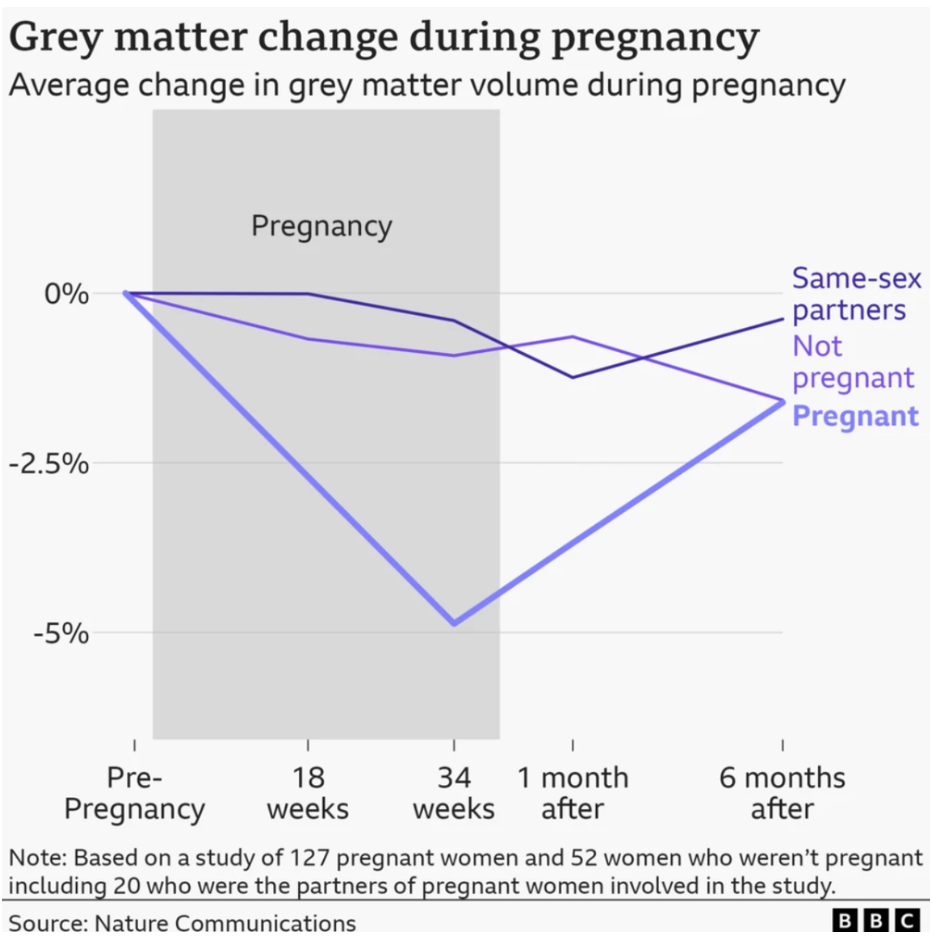
And research just published in Nature Communications helps us understand more about how brains change during pregnancy - grey matter is essentially 'pruned' to prepare mothers for the demands of caring for an infant. One of the areas of grey matter with the most pronounced and persistent changes was the so-called default mode network - which is involved in self-perception, empathy and altruism.
How I wish I had understood all this 15 years ago when I returned to work after having my first child. Now I recommend this book to all new mothers or those who are about to become mothers.
I'm encouraged too that so many organisations understand how transformative coaching can be to support women returning to work after maternity leave - if that's something you'd like to discuss you can book a free call here.
Dr Lisa Mosconi, in her excellent book The Menopause Brain, talks about the 'Three Ps' - puberty, pregnancy and perimenopause - three times when women's brains are undergoing similar phases of 'remodelling'. When you look at the table below and see the similarities in terms of how we then experience that remodelling in our day to day lives it's fascinating isn't it? (I talk about this in my Demystifying Menopause sessions.)
Coaching can provide much needed safe spaces to explore shifts in identity and resilience at both of these key life stages.
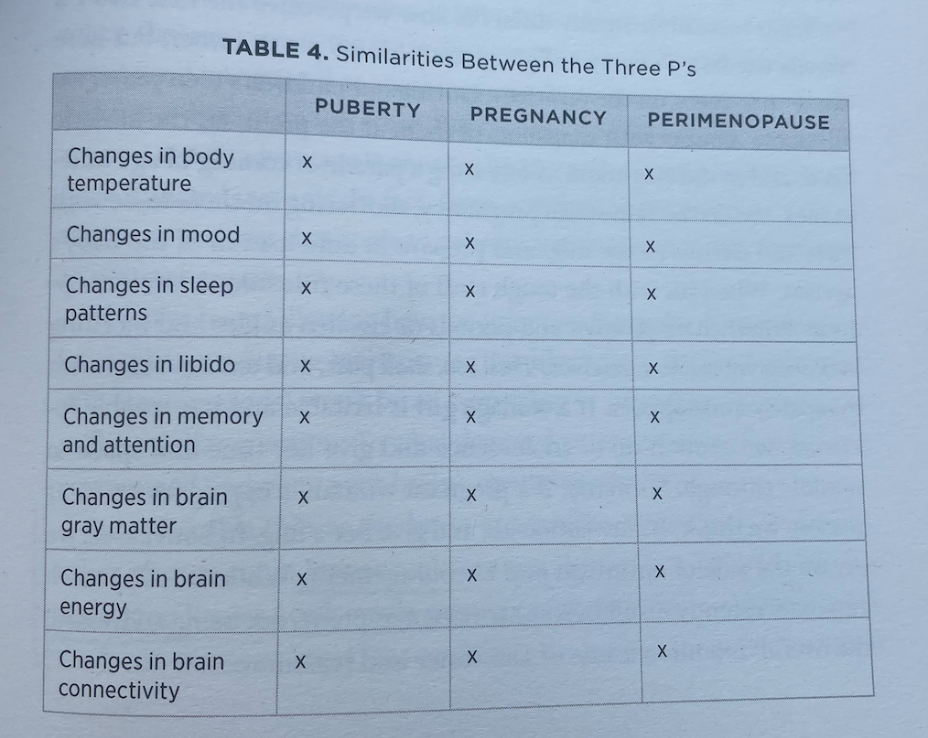
Source: The Menopause Brain, Dr Lisa Mosconi